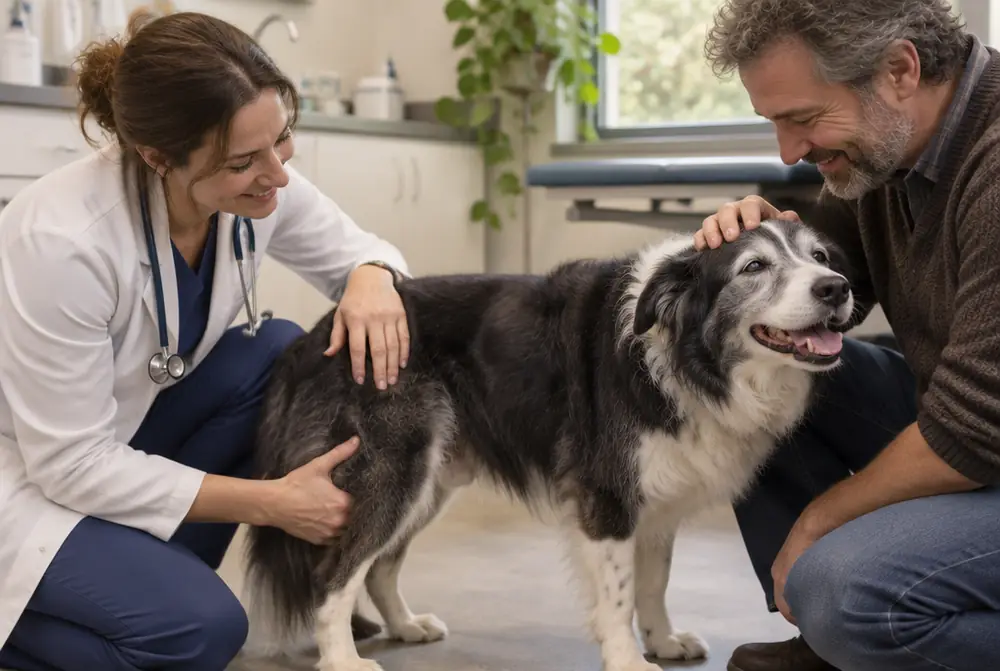
Senior dog care for dogs aged 7+
Senior dog care for their happiest later years.
A free dog age calculator, practical guides and printable care plans that help you spot changes early and keep your older dog comfortable, mobile and happy.
Every guide reviewed by our editor, Ali Luqman.
Clear sources. No miracle claims.
Dog age calculator
Life stage
Senior
Joint support, vet checks twice a year and a calorie plan matched to lower activity.
Size
Estimate based on common size-adjusted age charts. Every dog ages differently, so ask your vet.
Signs your dog is getting older
Most aging changes start quietly. Spot them early and you can act before small problems become painful ones.
Free senior dog care tools
Answer a few questions and get guidance built around your dog, not a generic article.
 Instant PDF download
Printable, instant download
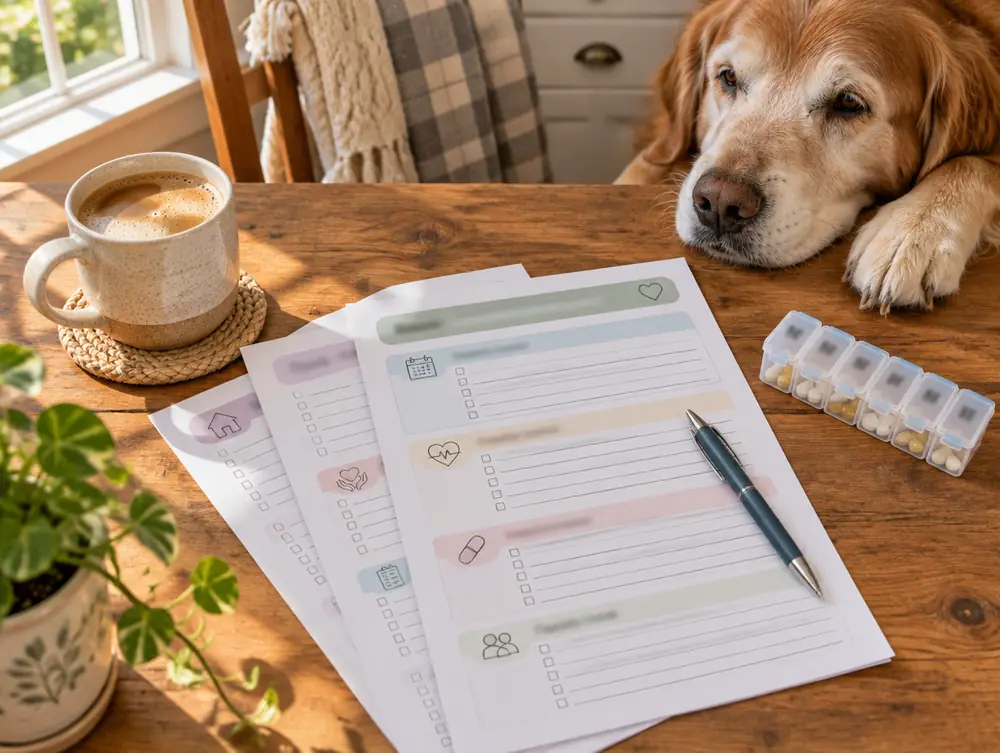
The Senior Dog Wellness Kit
One organized set that keeps your senior dog’s care on track: a 12-month calendar, health trackers and vet prep sheets, ready to print in minutes.
- 12-month senior care calendar with monthly check-ins
- Mobility and pain tracker to share with your vet
- Medication and supplement log
- Home comfort checklist: floors, beds, ramps and stairs
- Vet visit prep sheets and emergency contact card
30-day money-back guarantee.
Get the free Senior Care Plan
A one-page printable checklist plus one short, useful email a week about caring for an older dog. Unsubscribe any time.
Popular senior dog guides
Browse all guides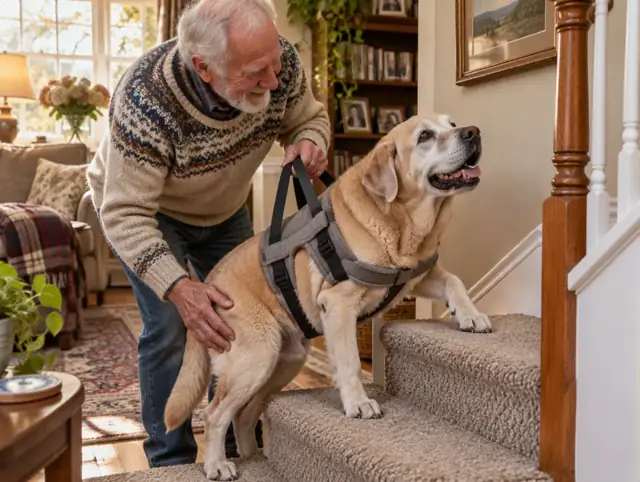
Senior dog care: your questions answered
Straight answers to what owners of older dogs ask us most.
When is a dog considered a senior?
Most dogs are considered seniors at around 7 years old. Size changes this: large and giant breeds often reach their senior years at about 6, while small breeds may not until about 10. Use our dog age calculator to see your dog's life stage.
How do you convert dog years to human years?
There is no single rule, and the old "multiply by 7" idea is a myth. Common size-adjusted charts count a dog's first year as about 15 human years and the second as about 9 more. After that, small dogs add roughly 4 years per year and large dogs 5 or more.
What are the first signs my dog is getting old?
Common early signs include stiffness when getting up, sleeping more, a greying muzzle, cloudy eyes, weight changes, less interest in long walks and changes in hearing or behavior. Any sudden change is worth a vet visit.
How often should a senior dog see the vet?
Many vets recommend a check-up every six months for senior dogs, because health problems can develop faster as dogs age. Your vet will advise what suits your dog.
Is PetWell Guide veterinary advice?
No. Our guides, tools and printable plans help you notice changes and stay organised, but they do not replace your veterinarian. Always talk to your vet about your dog's health.
Why owners trust PetWell Guide
We write for one kind of reader: someone who loves an older dog and wants clear, honest answers. That shapes everything we publish.